

Beta. The mounted drive is an early-access feature and isn’t on production yet. Behavior may change before general release. The connection address is shared with beta participants — contact Pixwel to take part.
rclone at it and your whole library shows up as folders:
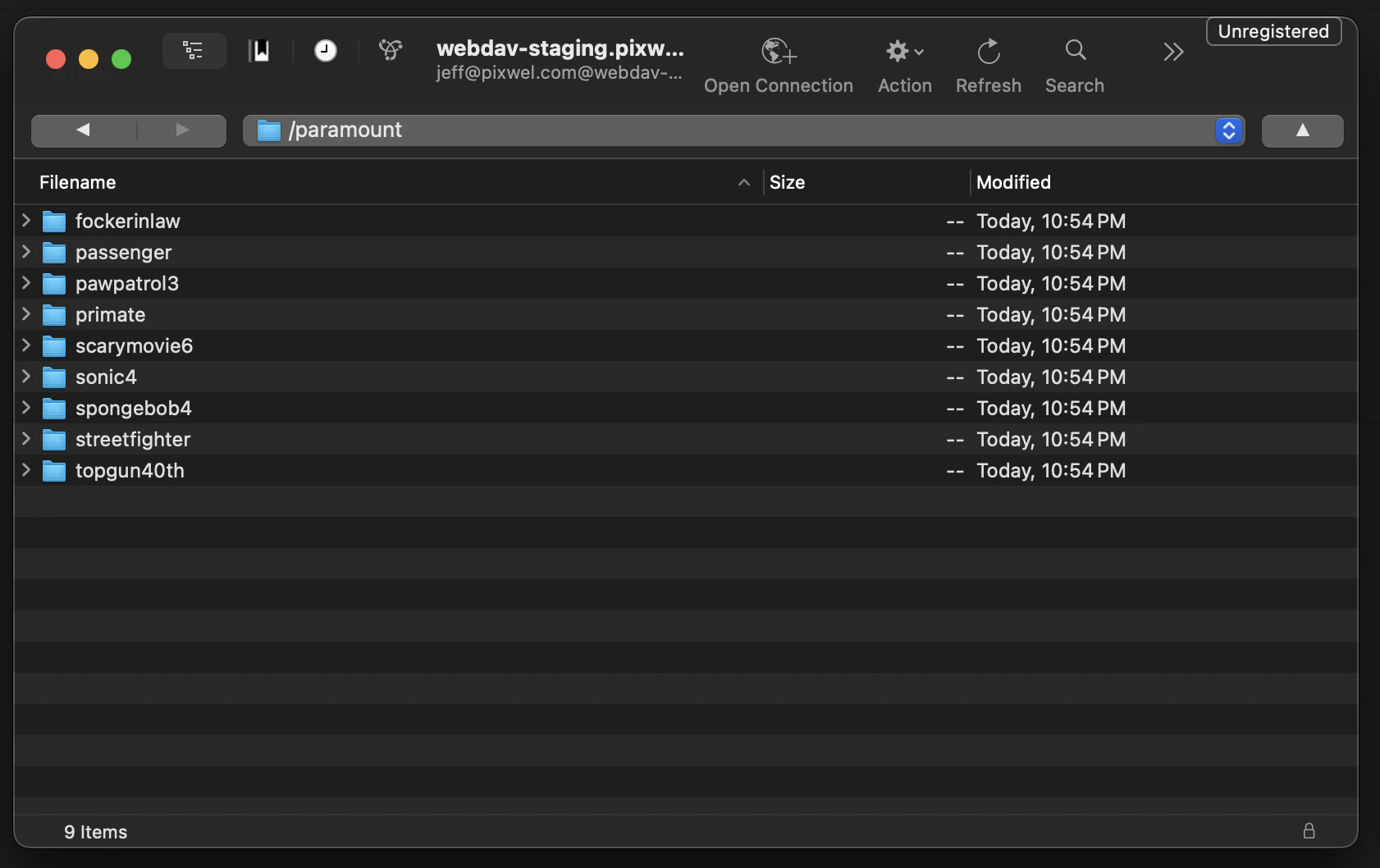
Why it’s useful
- Automation. Script against your files with
rclone(or anything that speaks WebDAV) — list, copy, and sync without clicking through the UI. - Overnight syncing. Deliverables often land while your team is asleep. A scheduled
rclonejob can pull new files the moment they’re available, so they’re waiting on your local storage or NAS by morning. - Familiar tools. Drag files out of Finder or Explorer like any other drive — no separate download manager.
Before you start
You’ll need an API token (a personal access token, prefixedpat_) — create one in Preferences. The drive uses HTTP Basic auth: put anything in the username field and paste your token as the password.
Connect
Pixwel provides the WebDAV connection address when you join the beta. Use it wherever the steps below show<webdav-address>.
- macOS Finder
- Cyberduck / Mountain Duck
- Windows Explorer
- rclone
In Finder, press ⌘K, enter
https://<webdav-address>, and paste your API token as the password.Finder probes every folder eagerly, so the first visit to a large directory can pause. Cyberduck or Mountain Duck feel snappier.What to expect
- Read-only. You can browse and download; you can’t upload, rename, move, or delete through the drive.
- Your permissions apply. You see exactly the studios, projects, and assets your account has access to — the same as the web app.
- Archived projects are hidden.
- Fast browsing. Each folder loads the first time you open it and stays quick for a few minutes after. Opening an asset’s files can take a few seconds the first time while sizes are read.
- Direct downloads. When you open a file it streams straight from storage at full speed — Pixwel just hands your client the download link.
Automate overnight pulls
A scheduledrclone sync is the payoff. For example, mirror a project’s new deliverables to local storage every morning:
Limitations
- Read-only — no upload, rename, or delete.
- Mac Finder’s eager folder-probing is the slowest experience; Cyberduck is recommended.
- A file’s modified date reflects when it was created in Pixwel, not its storage timestamp.
- As a beta, the endpoint and behavior may change.